participatory design
〰️
participatory design 〰️

Citizen Science Project: Drinking Water Contamination in Maine & New Hampshire
Engaged students, educators, and researchers in testing drinking water to improve public health
Naturally-occurring drinking water contaminants like arsenic pose serious long-term health risks, yet many communities lack affordable and accessible testing opportunities. Together with researchers, educators, and students, I coordinated a citizen science project around well water testing and data analysis, building it into middle and high school curricula in Maine and New Hampshire. The thousands of free samples collected helped community members learn about their drinking water quality and take steps to improve the quality of their drinking water. The project also improved data literacy and sparked community-driven advocacy efforts to increase access to safe drinking water.
primary role
project coordinator
time frame
2016–2021
skills applied
project management, stakeholder engagement, data management, visual communications
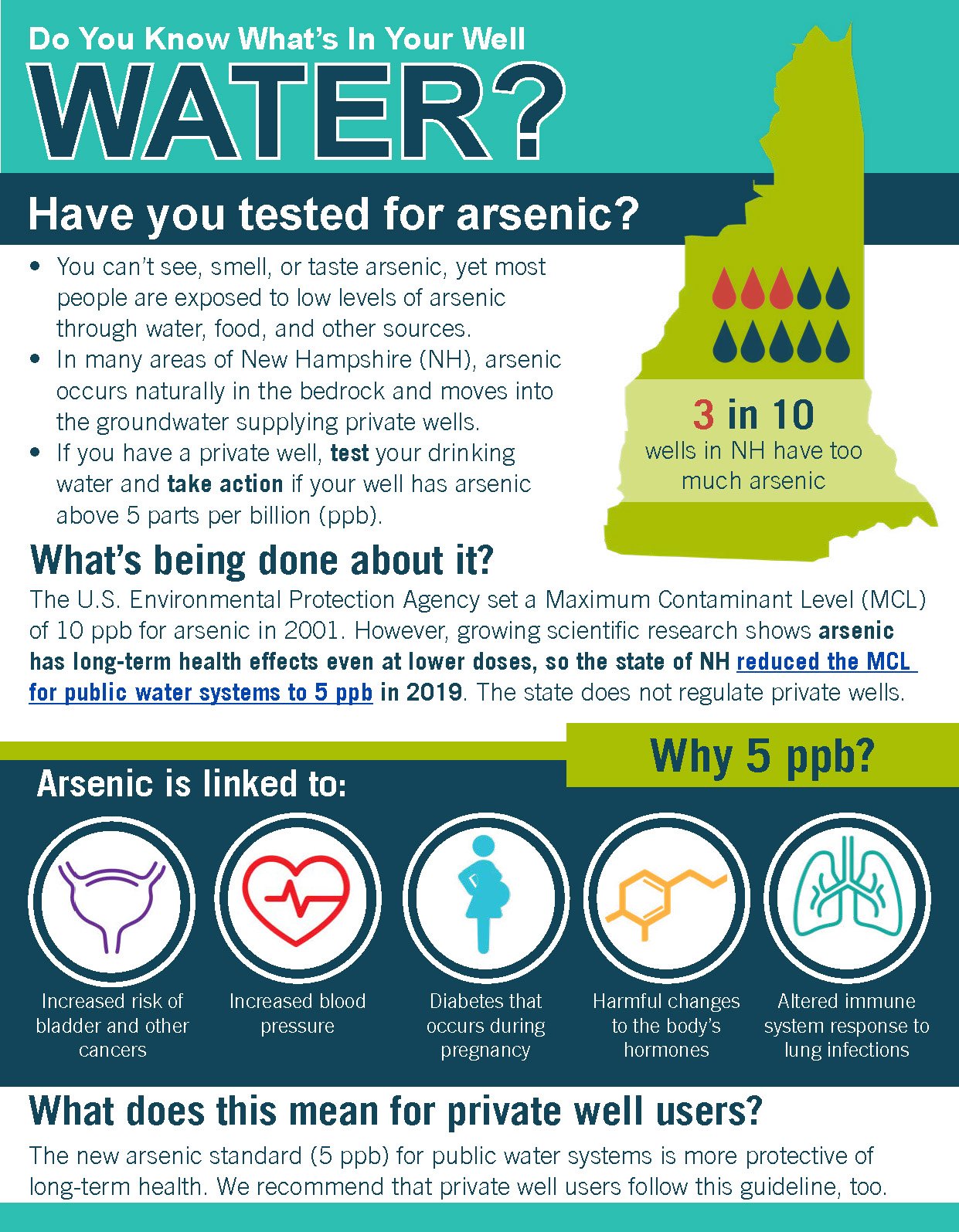
Making the project understandable to a wide range of stakeholders
The project involved students, teachers, parents, researchers, nonprofits, and policymakers with varying technical expertise. To communicate the goals clearly, I designed infographics translating complex science into accessible visuals.

Collecting high quality samples and data from citizen scientists
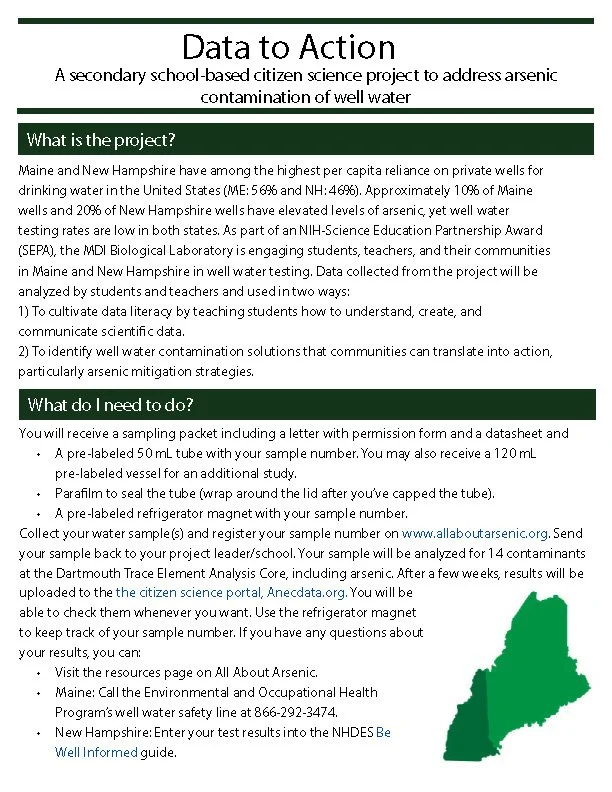
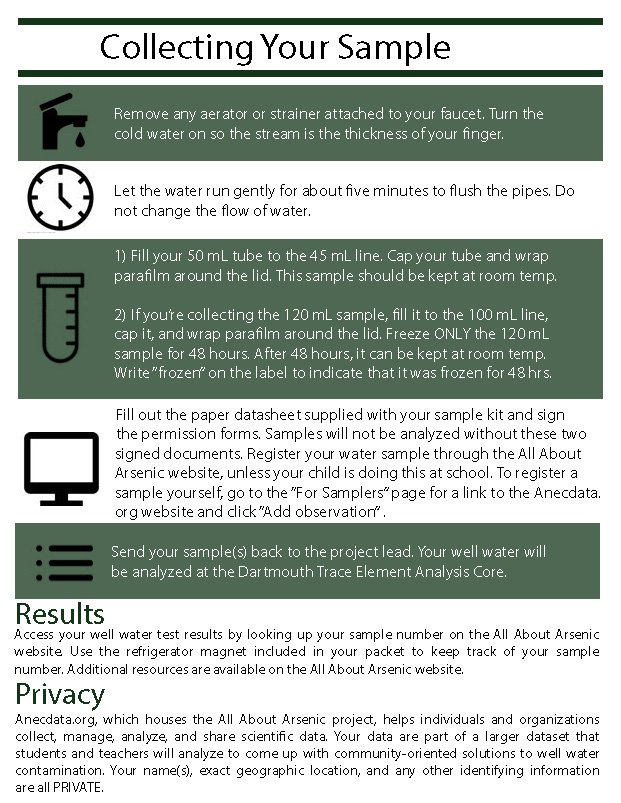
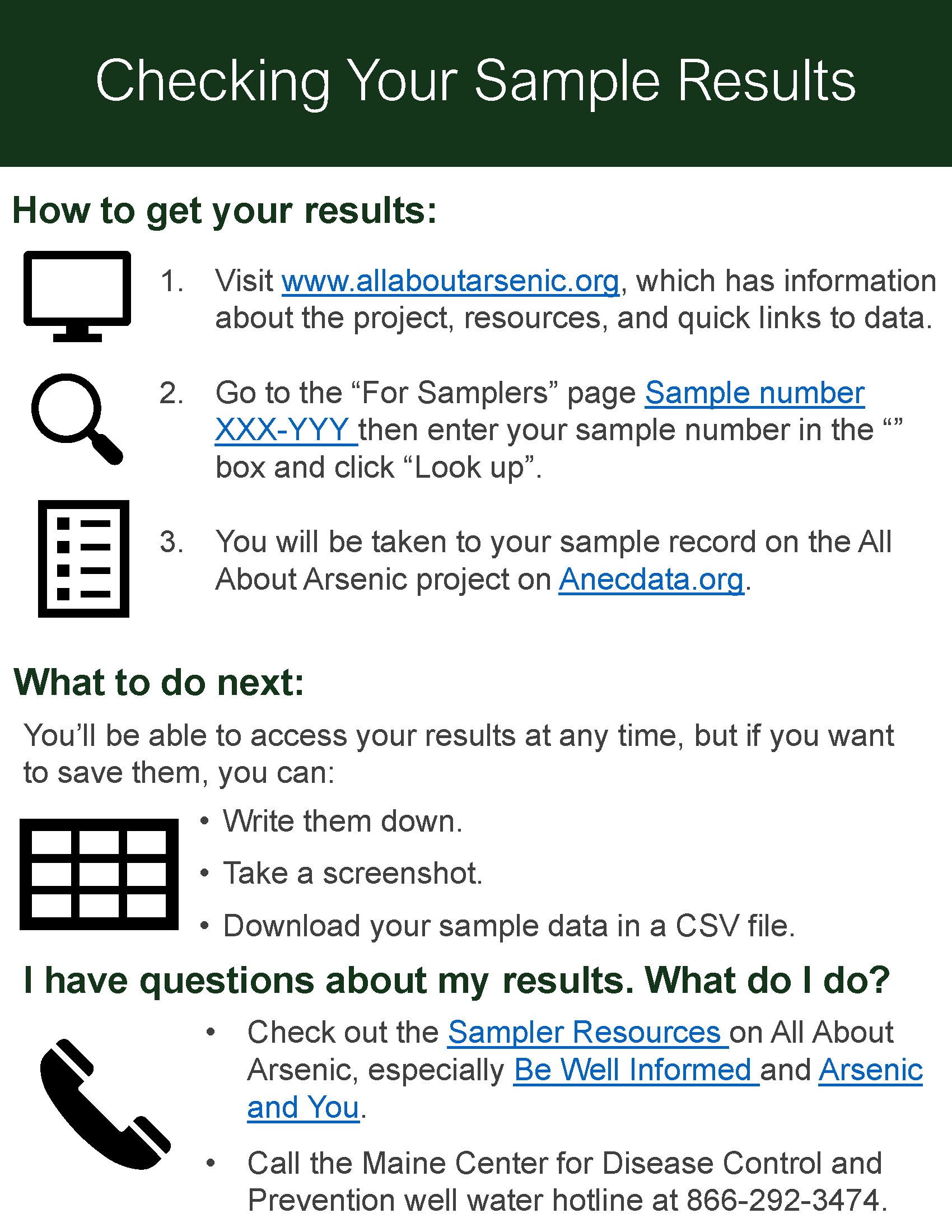
Designing a sampling protocol that worked for citizen scientists of all ages required an iterative, user-centered approach. We co-created and piloted the protocol locally to identify friction points before unrolling the data and sample collection process out to teachers and students. Students collected metadata using online and paper options, maintaining consent and privacy standards. Information about the project and instructions on collecting samples and checking sample results were printed and sent home with each student. To keep track of their sample number, samplers were provided with a personalized magnet. In addition to the sampling protocol, it was very important that we provide clear, actionable reports to families explaining their results and outlining what they could do if their drinking water exceeded any of the safe levels.
Translating data into community actions
Developed curricula and toolkits connecting students to advocacy organizations and local policymakers. Teachers led classroom activities that empowered students to share results, host forums, and take meaningful action in their communities.
A one-week data literacy workshop with teachers and academic researchers prepared teachers for implementing the project in their classroom.
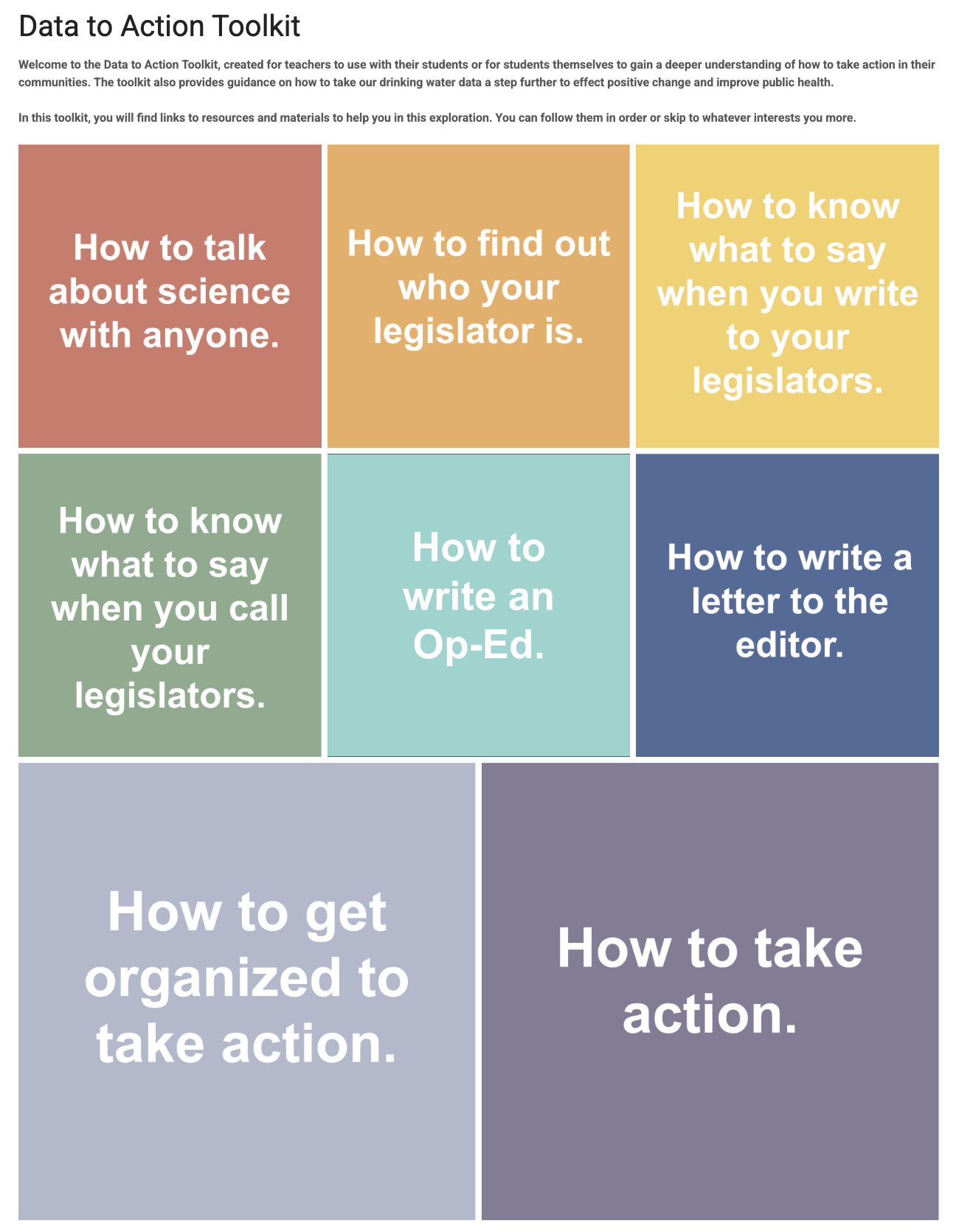
Toolkit on the All About Arsenic website guiding students through the above actions.
Outcomes / Impact
Students collected 3,070 drinking water samples.
The data collected by students more than doubled the information available to public health agencies across Maine and New Hampshire.
Pilot surveys showed participants began mitigating arsenic and other toxic metals exposure.
Students testified in the Maine State Legislature, helping pass LD1891 / HP 1401, providing grants for safe drinking water.
The project is ongoing and expanding!
Publications
A Mixed Methods Approach to Understanding the Public Health Impact of a School-Based Citizen Science Program to Reduce Arsenic in Private Well Water Environmental Health Perspectives · Aug 21, 2024
Defining drinking water metal contaminant mixture risk by coupling zebrafish behavioral analysis with citizen science Scientific Reports · Aug 27, 2021
Adaptations to a Secondary School-Based Citizen Science Project to Engage Students in Monitoring Well Water for Arsenic during the COVID-19 Pandemic Journal of STEM Outreach · Jul 1, 2021
Development of Privacy Features on Anecdata.org, a Free Citizen Science Platform for Collecting Datasets for Climate Change and Related Projects Frontiers in Climate · Apr 30, 2021