
Incorporating sustainability regulation into business strategy
Roadmapping future EU regulations for a sustainability startup
As part of my master’s degree capstone, we worked in teams with real clients on a sustainability challenge. My team worked with a sustainability startup to assess the impact of the proposed EU Green Claims Directive on their sustainable consumption platform, flagship sustainability competition, and broader business model. Guided by a double diamond process, we evaluated how proposed and existing regulatory requirements would affect language and product information across the platform. Through research, workshops, and scenario exploration, we developed two roadmap options that balanced compliance with the goals of the startup.
primary role
strategy and design
time frame
2025
strategic design, regulatory and policy analysis, roadmapping, stakeholder research, user testing, scenario planning and risk assessment
skills
Outcomes
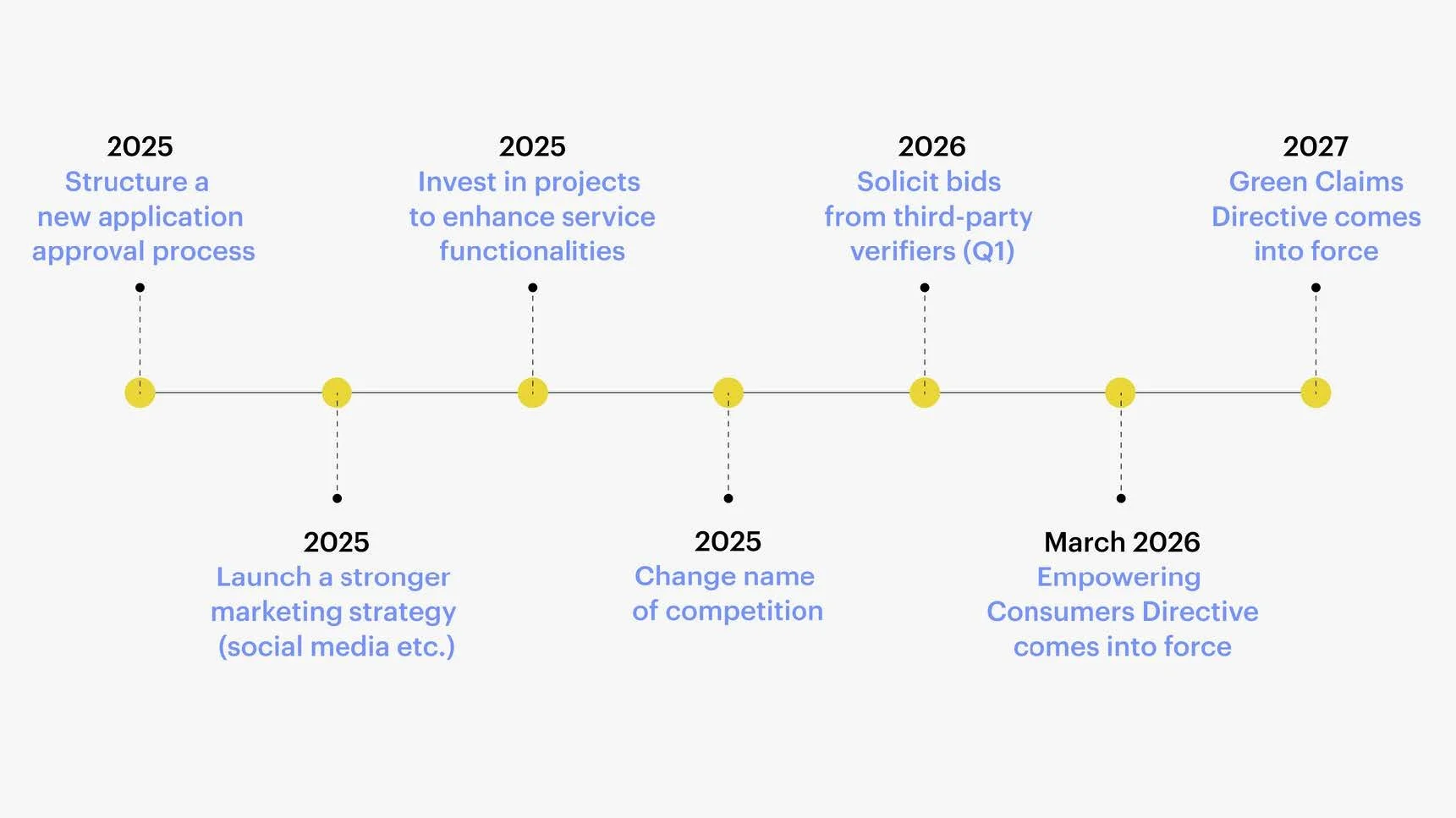
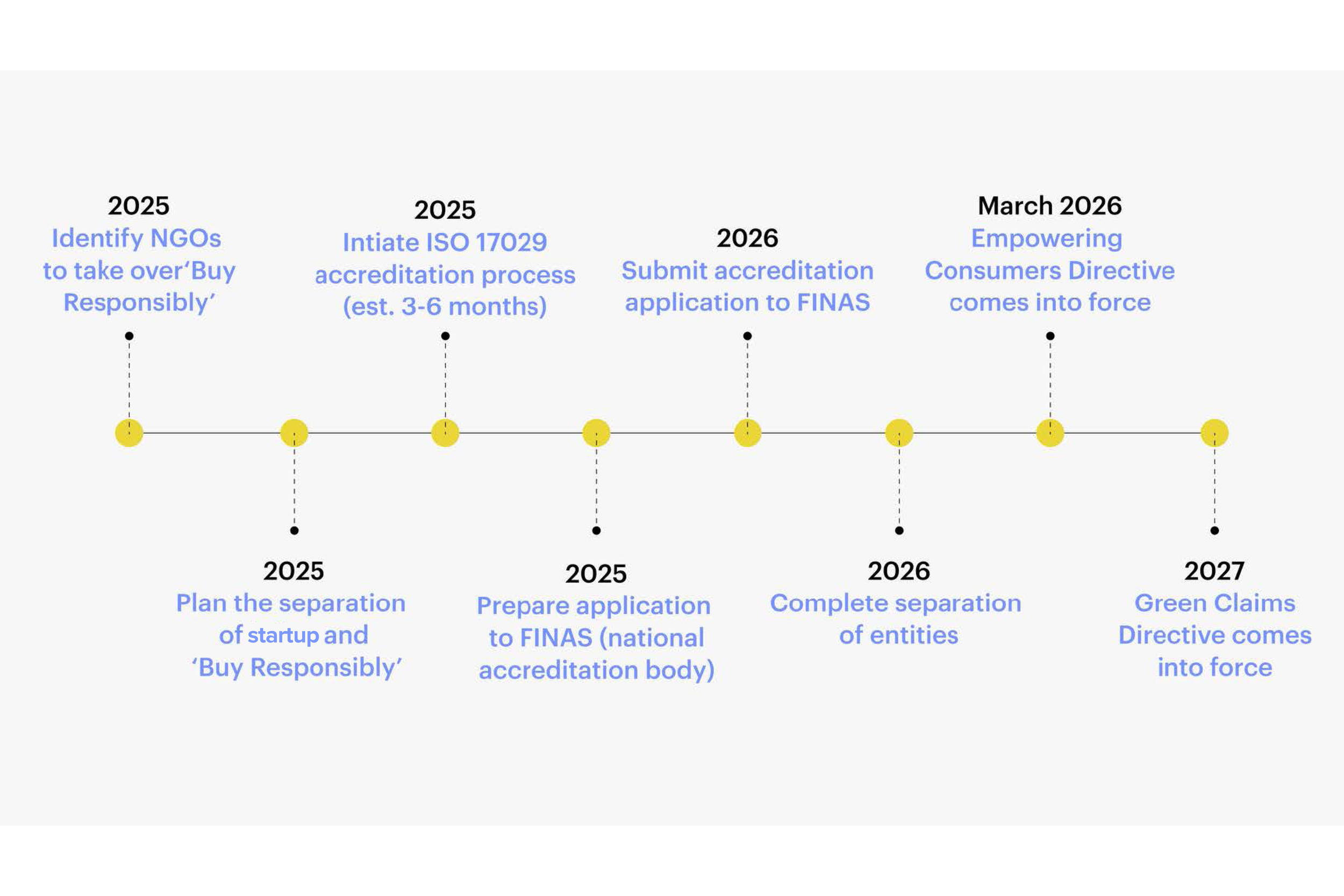
Due to ambiguity surrounding the final EU regulation, we developed two roadmaps for adapting the platform in a different direction. Each roadmap outlines how assessment processes and labels can be adjusted to meet stricter requirements while still encouraging the transition to more sustainable consumption.
Roadmap A
Roadmap B
Ultimately, while the sustainable consumption platform may not be a primary revenue driver, it fills an important niche in the sustainability transition by encouraging shifts in consumer behavior through education and sustainable consumption information. Investing in compliance with EU regulations now would pay off in the future. We also recommended changes to the platform’s visual identity and communication tone to support the brand’s credibility and reach, and thus impact. Based on user surveys, we proposed a rebrand to make the platform more user-friendly and trustworthy.
All graphics on this page were designed by Jamie Smyth.
Challenge
The startup’s digital platform aimed to promote sustainable consumption by assessing product sustainability through data and expert opinion and promoting the most sustainable products. However, the European Union had passed or was about to pass three directives that called into question the wording used on the platform. In the worst case scenario, the startup would have to shutdown the platform, impacting revenue and outreach efforts.
“We need to consider what the regulation means for us in practice and how we can best continue to promote sustainable production and consumption and ensure the success of our start-up while complying with the regulation.”
Research and Insights
Research focused on understanding how evolving EU sustainability regulation could affect the platform’s efforts at promoting more sustainable consumption. Using various design and business tools*, we identified key risks around the potential regulations and key needs of both platform users and the startup. We also considered the larger context of consumption and the role of sustainability now and in the foreseeable future. These insights informed the development of two roadmap options grounded in design thinking and business strategy.
*Legislative analysis, a user survey, competitor analyses, forecasting, interviews, workshops, scenario trees, SWOT analyses, and a four-field matrix with degrees of uncertainty.
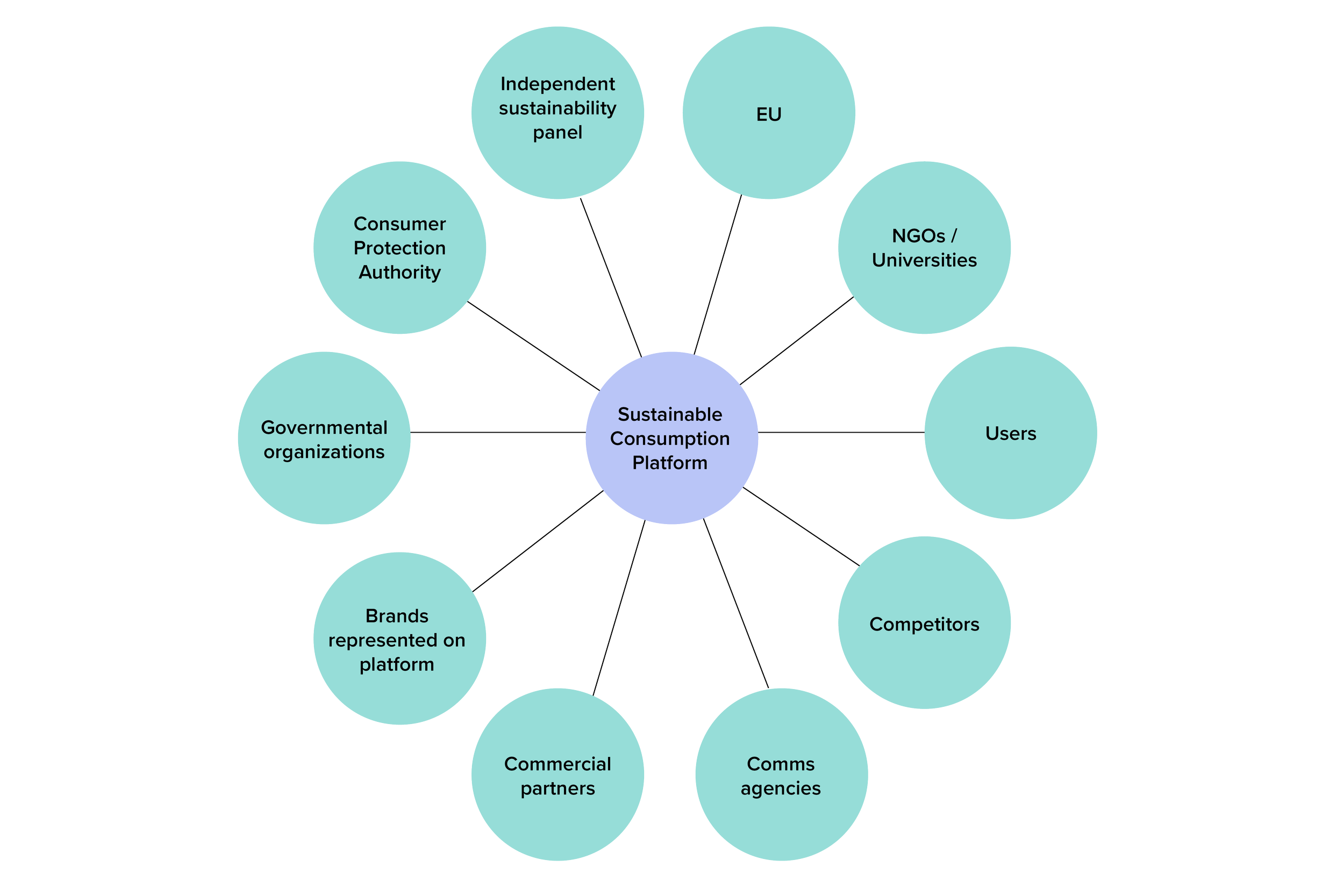
Stakeholder map.
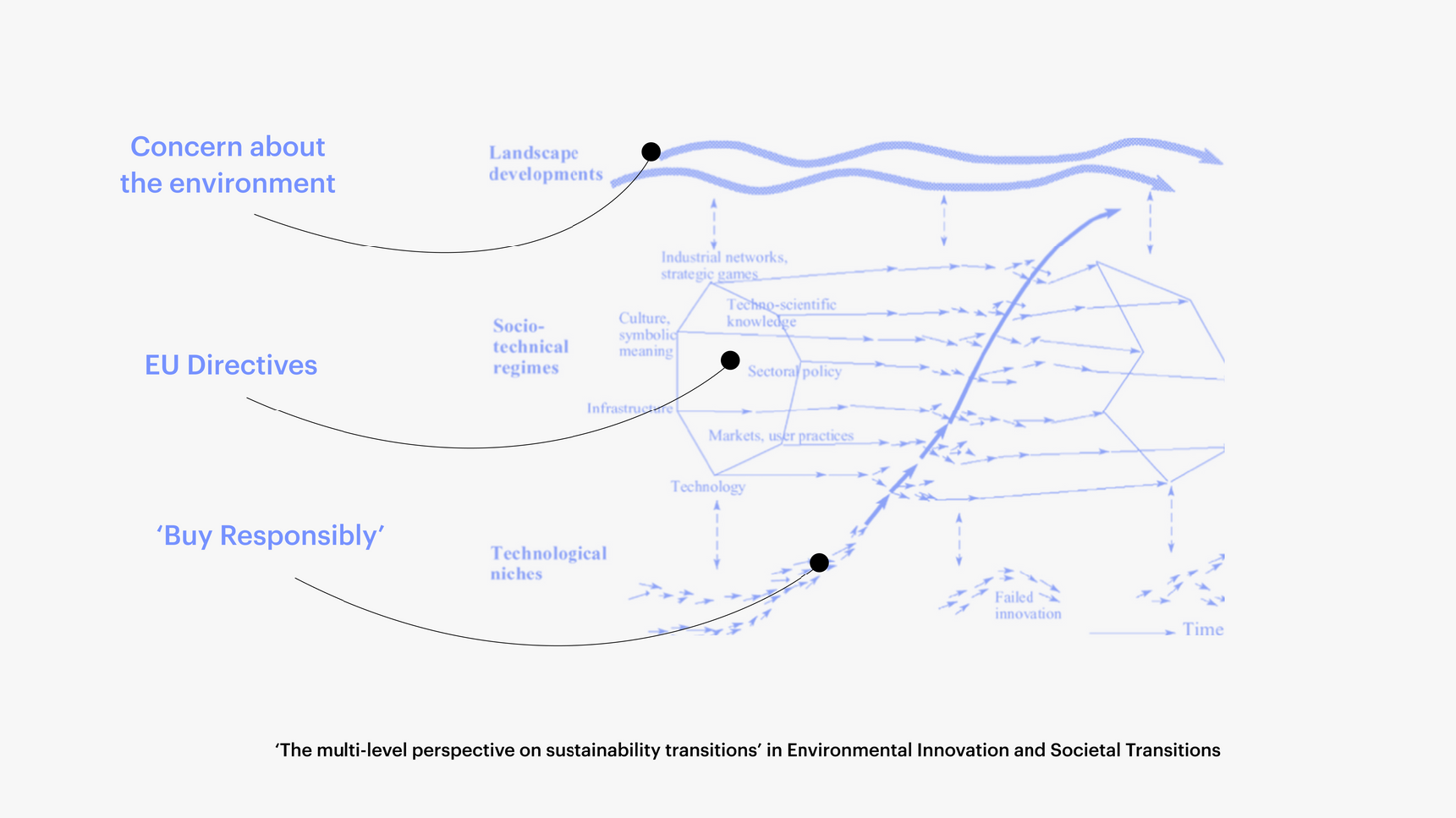
Forecasting using the Multilevel-Perspective on Sustainability Transitions framework (Geels, F. W., 2002).
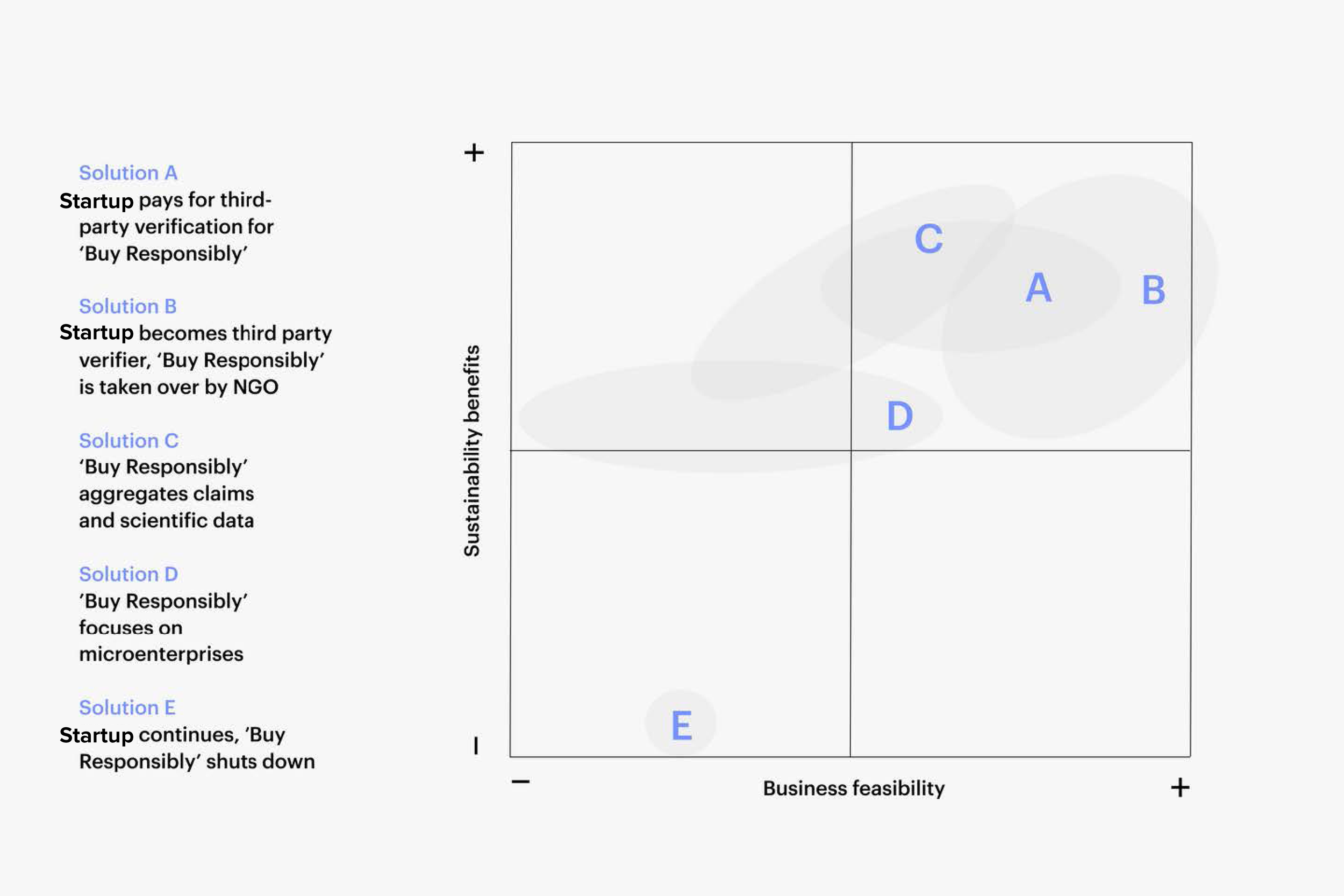
Four-Field Matrix showcasing original five solutions with degrees of uncertainty.
Process
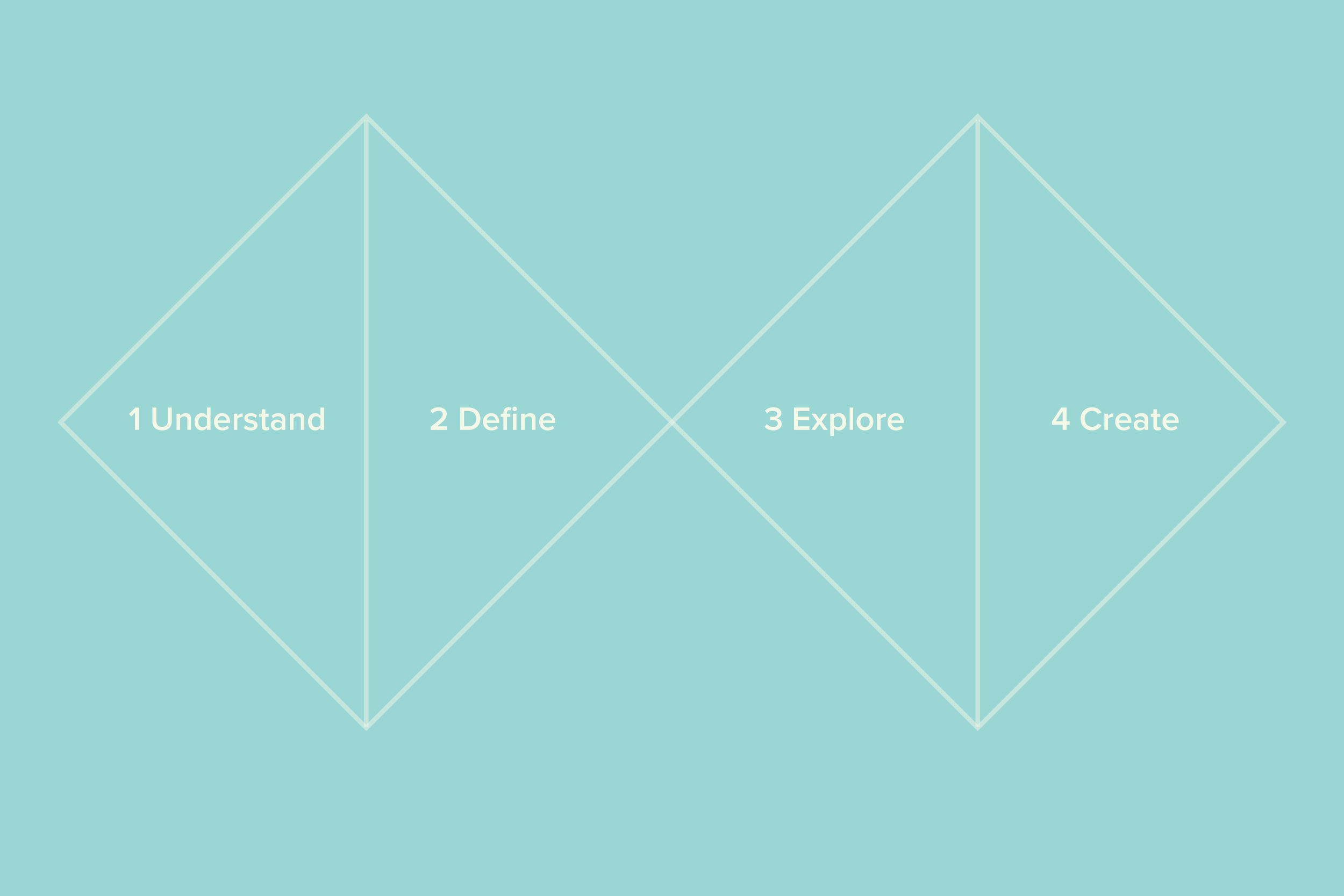
The project followed a double diamond process, moving from broad exploration to focused solution development. Early phases emphasized shared understanding through research and stakeholder alignment, while later phases prioritized ideation, evaluation, and synthesis. This structured approach helped the team narrow complex regulatory and design considerations into two actionable roadmap options.