Manifesto on Hope
This manifesto was developed as a group assignment for a master’s course called Critical and Transformative Futures. The brief was to create a manifesto with the theme Transformative Futures of Hope in a Time of Polycrisis, positioning hope in the context of sustainability transformations as described in public and academic discourse, with the ultimate aim of provoking our audience and inspiring action.
Futures study
Outcome
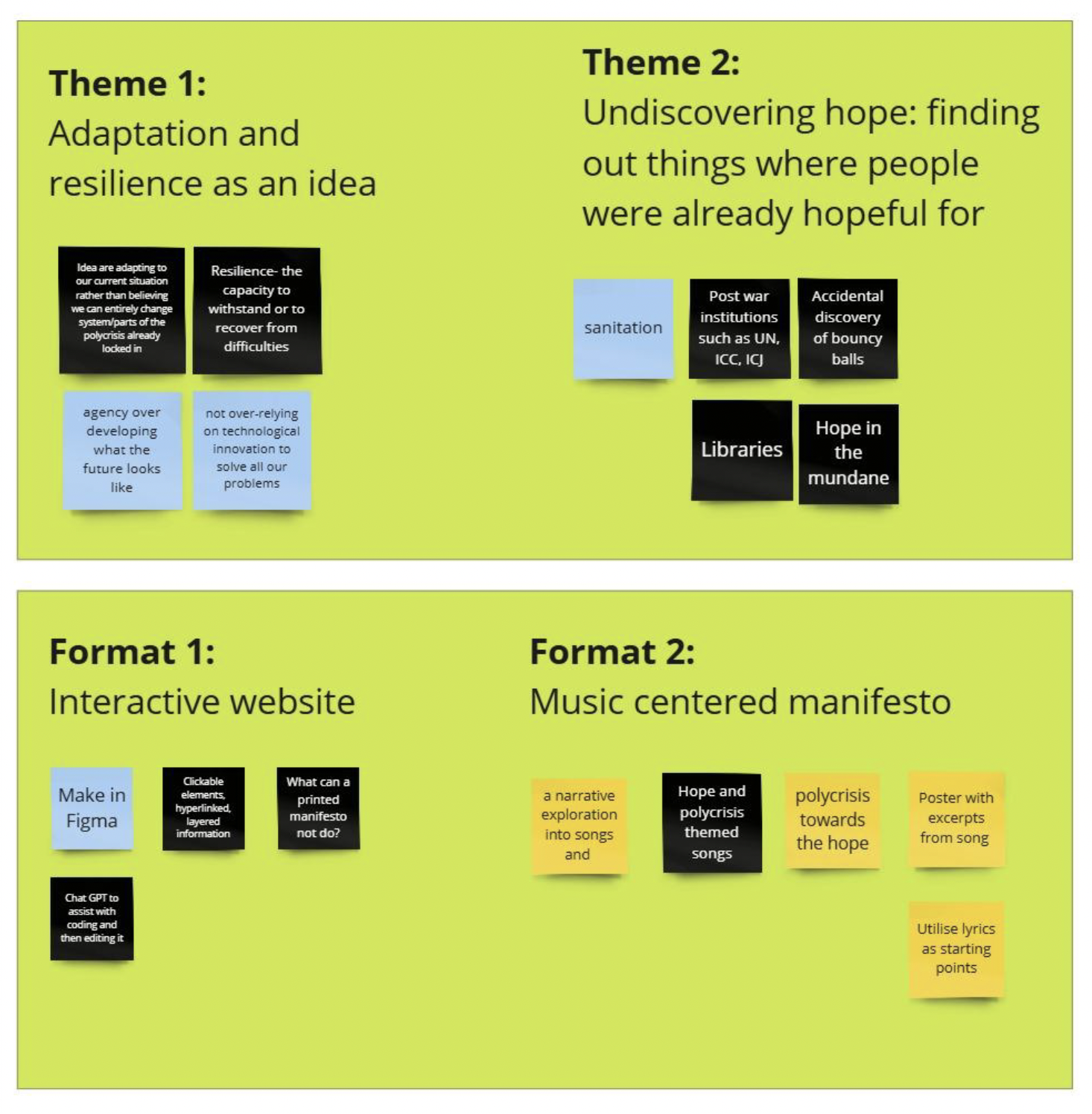
For our group manifesto on Transformative Futures of Hope in a Time of Polycrisis, we rejected the conventional text-based document in favor of an origami fortune teller (colloquially known as a "cootie catcher") as both the medium and part of the message.
The choice was deliberate. The fortune teller as a form enacts rather than merely describes the core tension in futures thinking: that the future is simultaneously structured and open, authored and discovered. Each fold of the artifact encodes a position or provocation, but the sequence in which they are revealed depends on the choices made by the person holding it. This mirrors the futures frameworks we engaged with throughout the course: futures are not predetermined narratives handed down by experts, but are co-produced through participation, play, and individual agency.
By inviting the audience to interact with the manifesto rather than simply read it, we staged hope not as a passive optimism but as an embodied, participatory practice. The tactile, play-centered element of the fortune teller also drew on decolonial and post-normal science perspectives explored in the course, challenging the assumption that futures knowledge must be formally published by academics.
In this way, the cootie catcher also functioned as a speculative design object, a provocation that carries the manifesto's position through its form, not just its content.
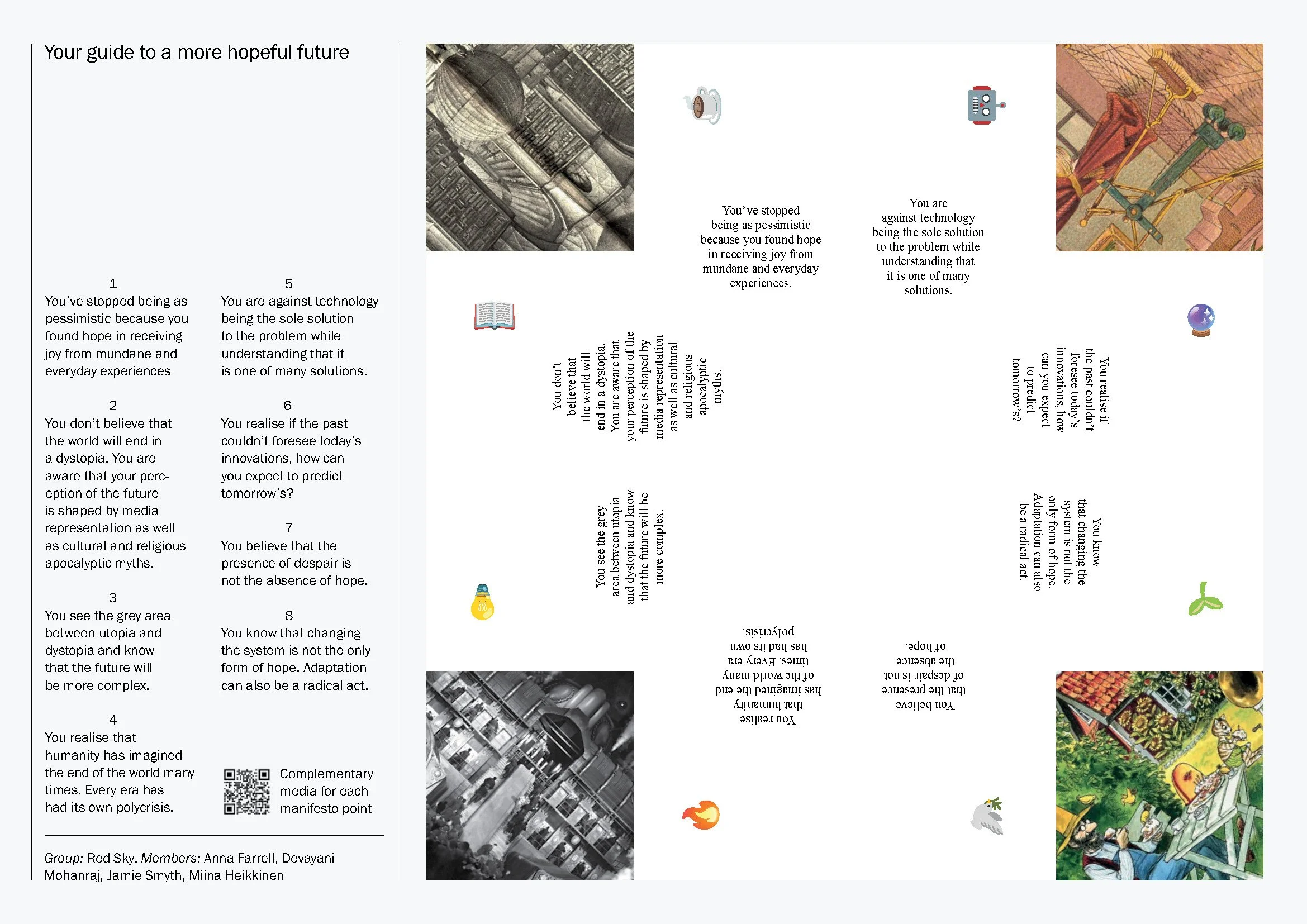
Graphic design and layout by Jamie Smyth
Process
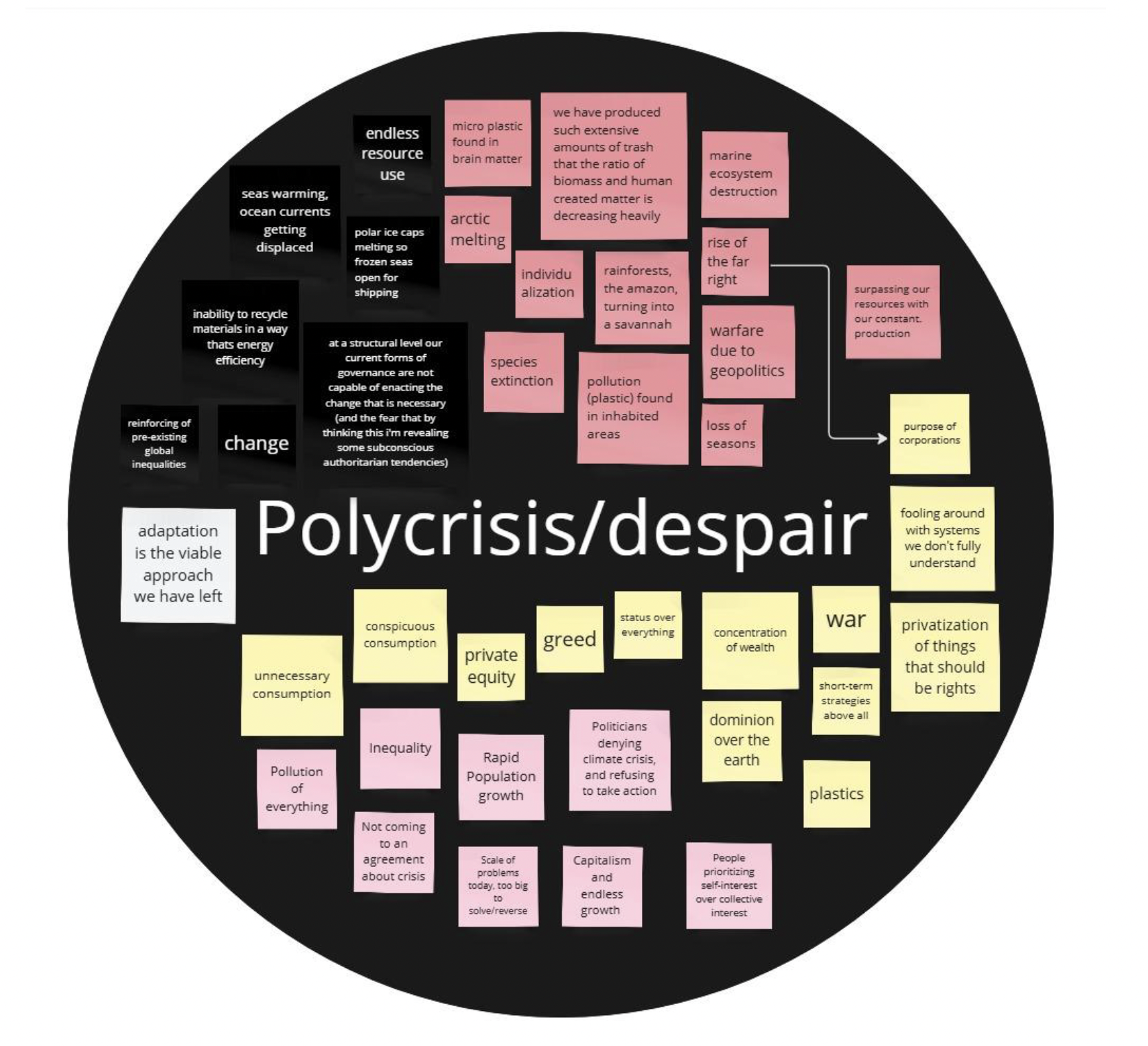
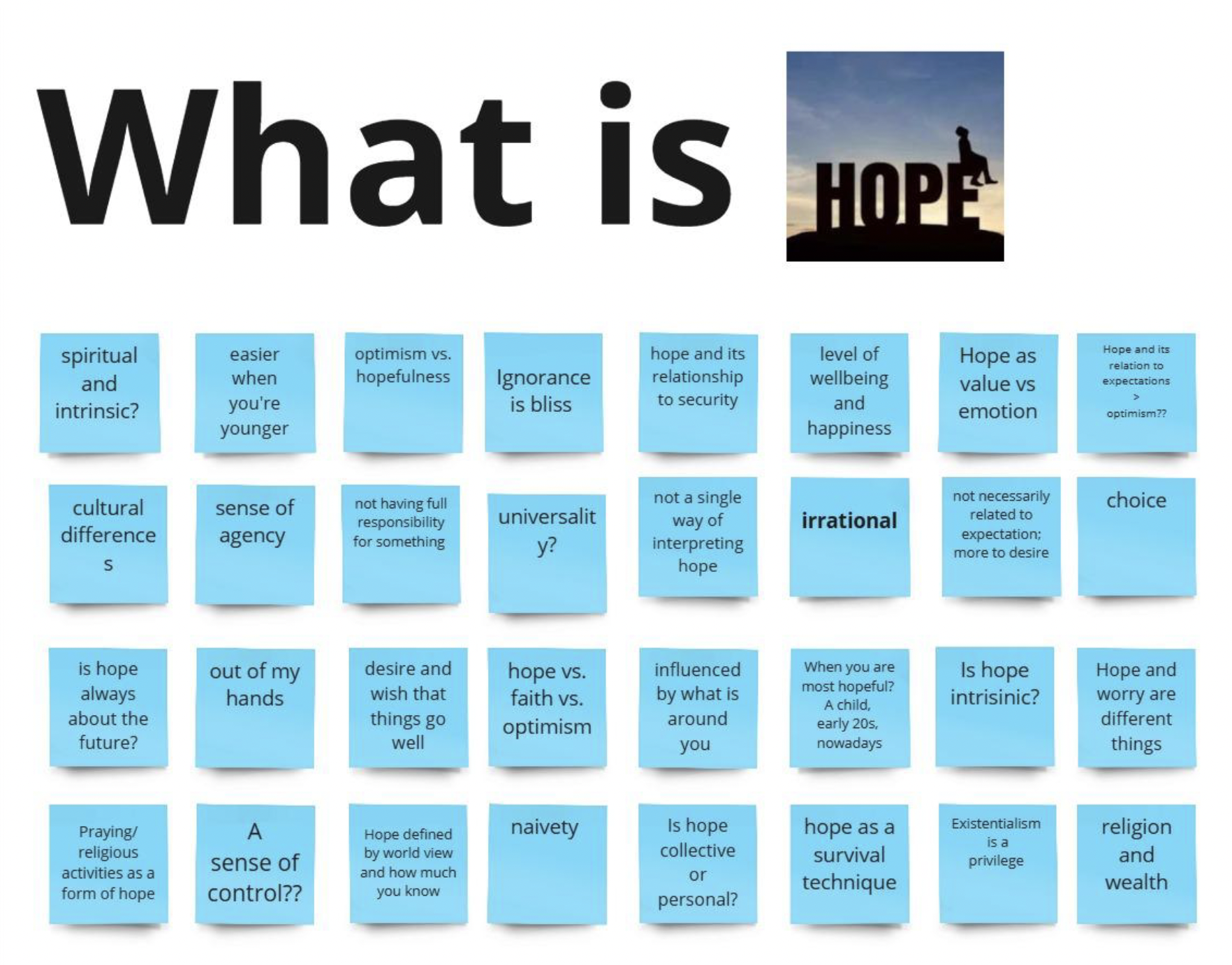
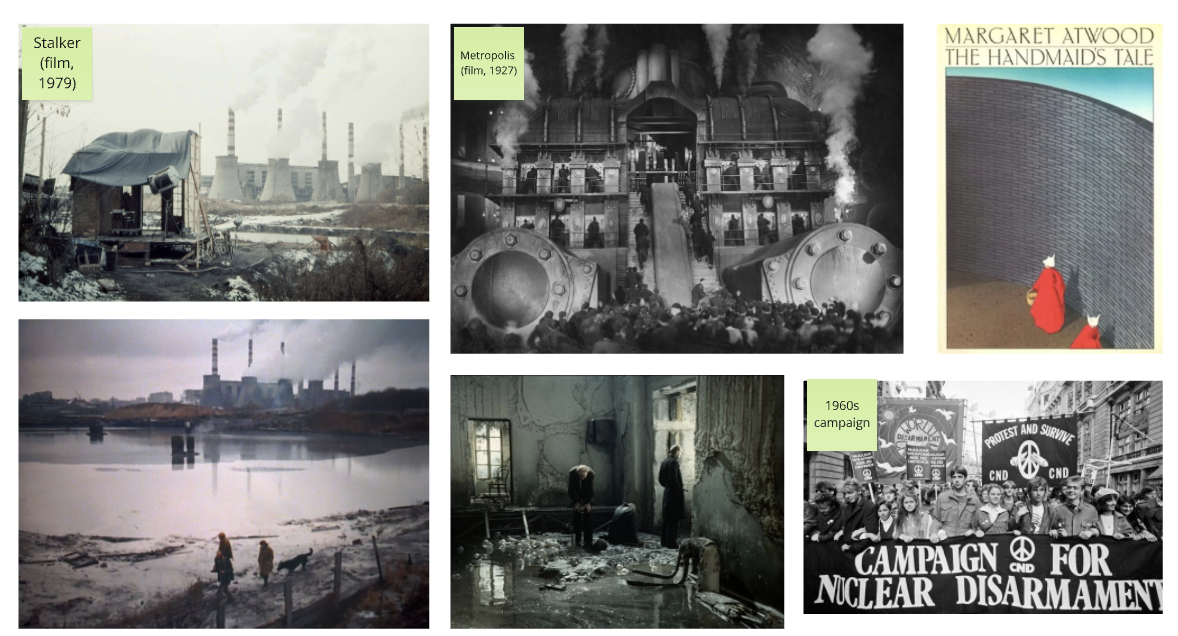
Manifestos are common in the world of design, calling out problems and proposing new visions of the future. Our manifesto needed to center on the concept of hope in a time when there are many crises happening simultaneously. Drawing on poststructural, decolonial, feminist, and post-normal futures scholarship, alongside tools such as the Three Horizons framework and Causal Layered Analysis, we interrogated how hope functions as both a personal and political force. Through popular culture, history, and philosophy, we examined how people have sustained hope during past crises and critically analyzed existing visions of sustainable futures.